
THE BLOG
Plumbing leads: how UK plumbers get more enquiries
Where plumbing leads come from, how paid lead sites charge, the cost per won job sum, and the Gas Safe and PECR rules every UK plumber should know.
The short
answer.
The short answer: plumbing leads come from paid lead sites, directories, Google and word of mouth. Paid leads fill gaps fast, but you pay for every one and never own them. Leads you own, from Google and past customers, build slowly but keep coming. Judge every source on one number: what it costs for each job you win.
This guide is for UK plumbers and heating engineers. It covers how paid plumbing leads usually charge, a simple sum to compare them, how to build leads you own, why answering fast matters, and the two sets of rules you need to know: Gas Safe for gas work, and PECR for marketing texts and emails. Every price and rule below links to the provider's own page or the official source, checked on 19 November 2026.
Get your free Google report (free until 1 December 2026) to see how your plumbing business shows up on Google today. Or call 07745 451139.
Where plumbing leads come from
Most plumbing leads arrive through one of these routes:
- Paid lead sites. Platforms that collect job requests from homeowners and sell them to trades, either per lead, through credits or through a monthly membership.
- Managed ad services. Companies that run Google Ads for you and pass you the calls and messages, for a monthly fee.
- Directories. Free and paid listings where customers look you up. Some are lead sites as well.
- Google. Your Google Business Profile in the map results, your own website in the normal results, and any Google Ads you run yourself.
- Word of mouth. Past customers, repeat work, neighbours who saw your van, and the reviews you collect.
The first two are leads you rent. The last two are leads you own. Directories sit in the middle. A healthy plumbing business usually uses more than one route, so a quiet month on one doesn't empty the diary.
We've written a general guide for all trades on how to get more customers without paying for leads. This post is just for plumbers, and it looks at both sides: paying for plumbing leads and building your own.
Paid plumbing leads: how they usually charge
Paid plumbing leads come in three main pricing models. Prices change, so always check the provider's own page and get the price in writing, with VAT, before you sign. Where a provider doesn't publish a price, treat it as unknown until they give you one.
Pay per lead or credits
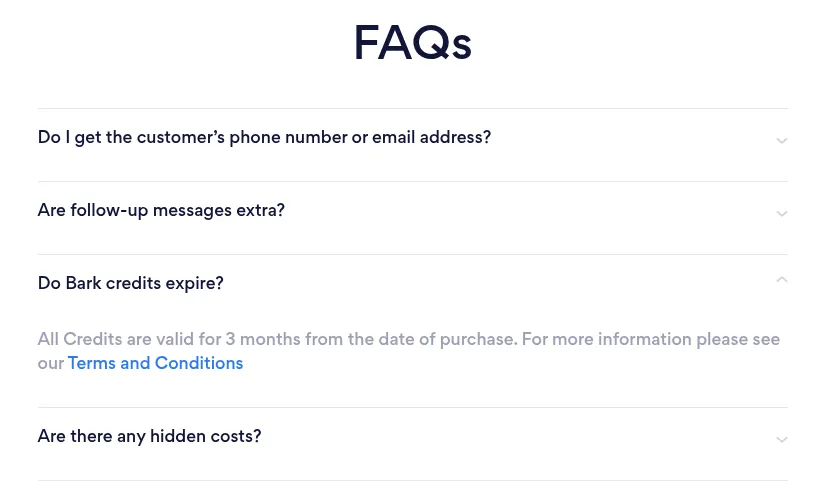
You pay each time you choose to contact a customer. Bark is one example. As we explain in our Bark review for tradespeople, Bark runs on credits: you buy a credit pack, each lead shows its credit cost before you respond, and its UK pricing page says "All Credits are valid for 3 months from the date of purchase" (checked 20 November 2026). You pay to respond whether or not the customer replies or hires you.
Monthly membership
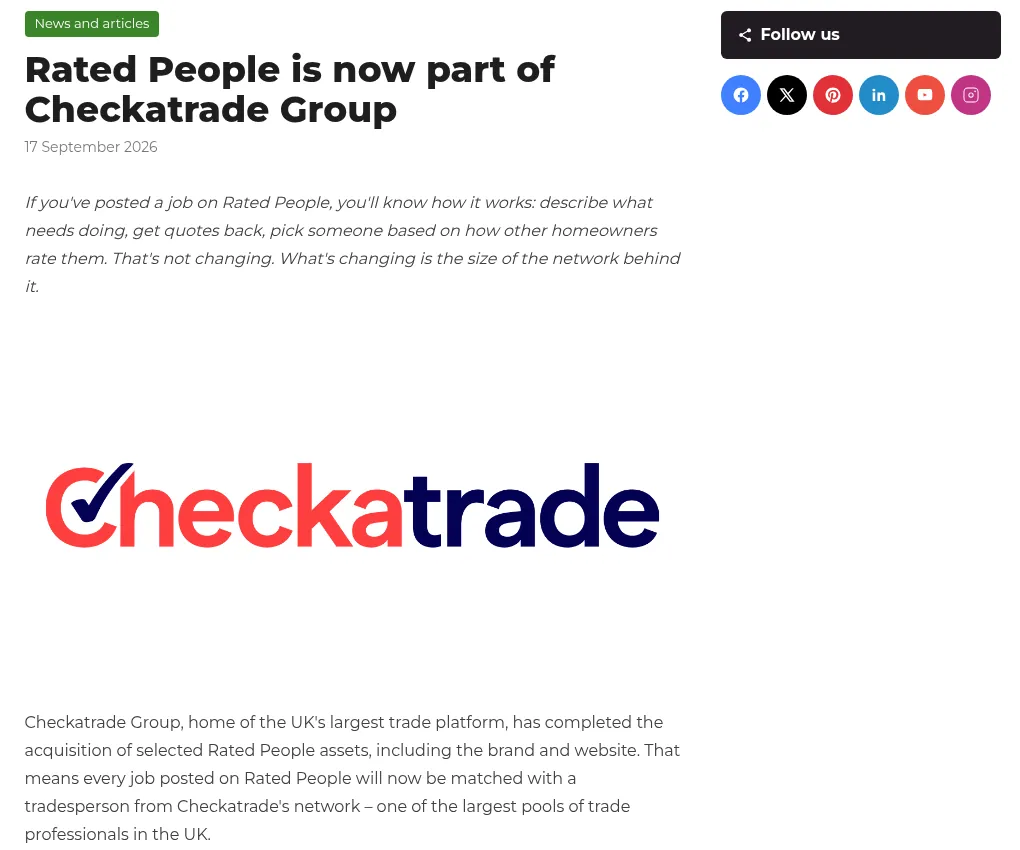
You pay a monthly fee to be listed and to get access to leads. Rated People is now part of Checkatrade Group, and its own news page (dated 17 September 2026, checked 20 November 2026) says you can currently only buy Rated People leads by becoming a Checkatrade member, starting at £30 per month. The price for your trade and area depends on the plan. Our Rated People review covers what changed and what to ask before you sign.
Managed Google Ads subscription
Some companies run Google Ads for you, send the enquiries to a landing page they build, and pass the calls and messages on. Get Work, the top result on Google UK for plumbing leads when we checked on 19 November 2026, works this way. Its pricing page (checked 20 November 2026) lists four monthly subscriptions, starting at £600 plus VAT, which includes £300 of Google Ads spend and an estimated 15 monthly leads. The same page says estimated monthly leads can vary by trade, location and time of year, and that there's no setup fee. On contracts, the page shows a "No contract" monthly option, but its FAQ says Get Work's starting contracts run month to month, and that quarterly and annual contracts also exist, where you have to wait until you're out of contract to cancel. Check which one you're signing.
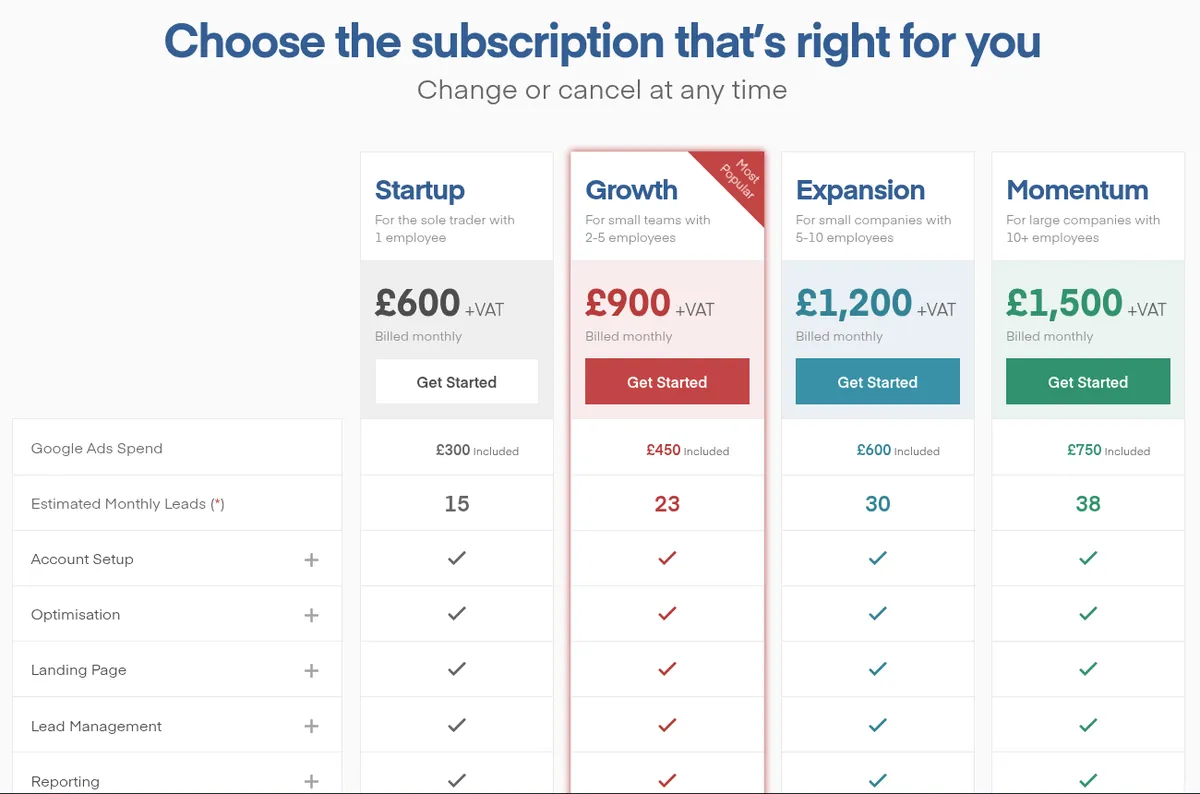
That's a published estimate, not a promise, so it's a good example of why you need the next section.
We don't recommend or sell any lead service. These examples are here so you can see how the main models charge and compare them fairly.
The sum that matters: cost per won job
The price of a lead tells you very little. A cheap lead you never win costs more than a dear one you do. What matters is how much you spend for each job you actually get paid for.
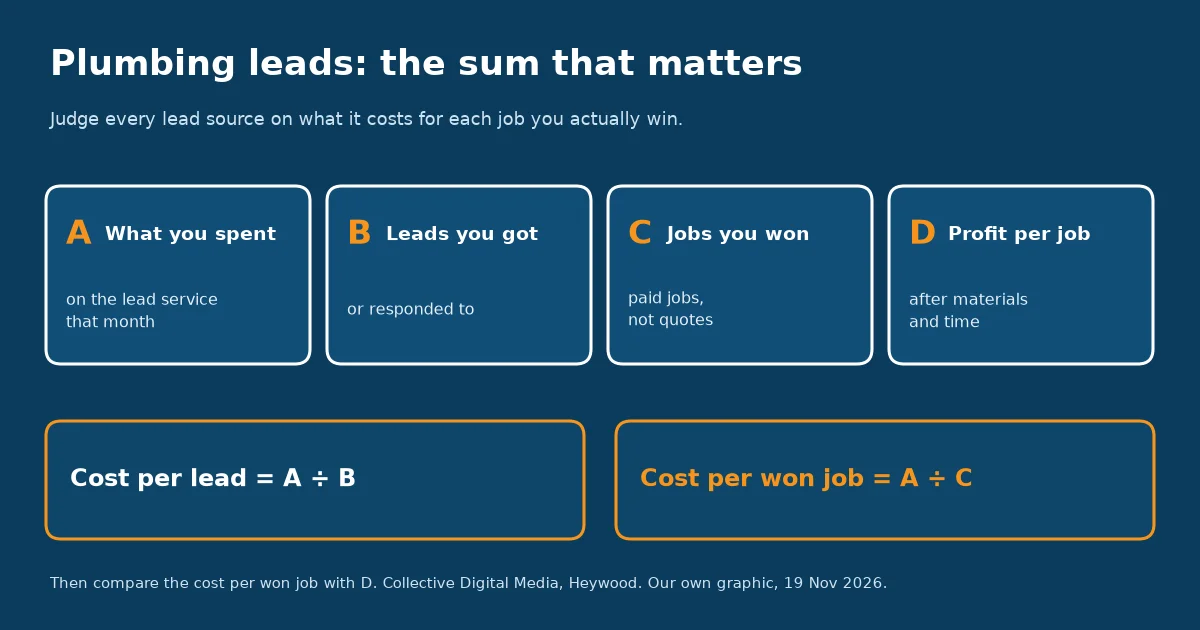
You need four numbers, all from your own records for one month:
- A: what you spent on the lead service that month.
- B: leads you received (or responded to).
- C: jobs you actually won from those leads. Paid jobs, not quotes.
- D: average profit per job for that kind of work, after materials and time.
Then do two sums:
- Cost per lead = A ÷ B
- Cost per won job = A ÷ C
Compare the cost per won job with D. If it eats a big part of your profit, the service isn't paying. If it's a small slice, it may be worth keeping.
Example only (not real results): take the Get Work Startup plan's published figures, £600 plus VAT for an estimated 15 leads. That's £40 plus VAT per lead. If you won 1 in 3 of those leads, that's 5 jobs, so £120 plus VAT per won job. If you won 1 in 10, it's £400 plus VAT per won job. Same price, very different answer. Your own win rate is the number that decides it.
Run the same sum for every route you use, including your website and Google Business Profile (what you pay for them each month, against the jobs they bring in). We use the same method in our post on Checkatrade vs your own website.
Marketing for plumbers: building plumbing leads you own
Leads you own are the ones that come to you, not through a platform that can change its prices or close. Good marketing for plumbers starts with three things, and none of them needs a big budget.
Your Google Business Profile
When someone searches "emergency plumber" with a town name, Google usually shows a map with three businesses under it. That's where a lot of plumbing calls start, and a Business Profile is free. Pick the most specific category, list the services you really offer, set accurate hours and use a phone number that gets answered. Our guides cover setting up a Google Business Profile and how to get into the Google Maps 3 pack.
Your website
A website is where customers check you're real before they ring, and it's the one place online you fully control. For plumbers, that means a clear page for each main job (boilers, leaks, bathrooms, blocked drains), the towns you cover, your Gas Safe number if you do gas work, and a phone number people can tap to call. Our SEO for plumbers page explains how we help plumbers in Heywood, Rochdale, Bury and across Greater Manchester get found for those searches. If you're wondering whether you need one at all, read do tradesmen need a website?, and for budgets, how much a website costs for a tradesman in the UK.
Reviews and word of mouth
Reviews help people choose you, on Google and everywhere else. The simplest habit is to ask every customer for a review when the job is finished, with a direct link so it takes them a minute. Don't pick only the happy ones, and never offer anything in return for a review.
Marketing for plumbers that you own builds up over time. Paid plumbing leads stop the day you stop paying. Most plumbers do best with a mix while their own leads grow, using paid leads as a top up rather than the whole of their marketing for plumbers. Plumbing marketing you control is also the part no platform can switch off.
If you'd rather have help with the Google side, our lead generation and SEO services are built for local trades.
Follow up fast, whatever the source
The quickest way to waste plumbing leads is to miss the call. Someone with water coming through the ceiling will ring the next plumber on the list if you don't pick up. It's the same with paid leads: on most lead sites the customer is talking to more than one trade.
Simple fixes:
- Answer, or call back as soon as you can between jobs.
- Send a text straight back when you miss a call, so they know you've seen it. Our post on missed call text back for trades shows how.
- Reply to website and Google messages the same day.
- Keep a note of where each enquiry came from, so your cost per won job sum is accurate.
The rules: Gas Safe and marketing texts
Two sets of rules matter when you go after plumbing leads.
Gas work: you must be on the Gas Safe Register
Under the Gas Safety (Installation and Use) Regulations 1998, regulation 3, a self-employed person must not carry out work on a gas fitting or service pipework, and an employer must not let an employee do it, unless they're a member of a class of persons approved by the Health and Safety Executive. The same regulation says no one may falsely pretend to be a member.
HSE's Gas Safe Register page explains that for a gas engineering business to legally do gas work covered by the regulations, it must be on the Gas Safe Register, and that registered engineers carry an ID card showing the categories of work they're qualified for.
What that means for your leads: only advertise, quote for or accept gas jobs, such as boiler installs, boiler repairs or gas fires, if you're registered for that kind of work. If you're not Gas Safe registered, set your lead site preferences and your website so they don't bring you gas jobs.
Marketing texts and emails: PECR
If you text or email people about offers, the Privacy and Electronic Communications Regulations (PECR) apply. The ICO's guide to electronic mail marketing (checked 19 November 2026) says:
- You must not send marketing emails or texts to individuals without their specific consent.
- There's a limited exception for your own previous customers, often called the soft opt-in. It covers people who bought, or talked about buying, a similar service from you, but only if you gave them a simple way to opt out when you collected their details and in every message.
- The soft opt-in doesn't cover new contacts, such as bought-in lists.
- Sole traders and some partnerships are treated as individuals. You can email or text companies, but keep a "do not email or text" list of any that object.
- You must say who you are and give a valid way to opt out.
The ICO notes that this guidance is under review because of changes made by the Data (Use and Access) Act, so check its page before you start a campaign. In practice, a reminder to a past boiler customer that their annual service is due, with an opt-out, can fit the soft opt-in. A text blast to a list you bought does not.
This is general information, not legal advice.
Ready to get more plumbing leads you own?
Start by seeing where you stand. Get your free Google report (free until 1 December 2026) and we'll show you how your plumbing business looks on Google today and what to fix first. Or call James on 07745 451139.
FAQ
How do plumbers get leads?
Plumbers get leads from paid lead sites, managed ad services, directories, Google (their Business Profile, website and ads) and word of mouth. Paid routes are quicker to start. Google and past customers take longer but keep bringing work without paying for each lead. Most plumbers use a mix.
Are paid plumbing leads worth it?
They can be, if your cost per won job is well below your profit per job. Work it out with your own numbers: what you spent in a month divided by the jobs you actually won from those leads. Check the provider's own pricing page, including VAT and any contract, before you sign.
How can I get more plumbing jobs in my area?
The best marketing for plumbers is local. Make sure you show up when people in your area search on Google: a complete Google Business Profile, a website with a page for each main job and the towns you cover, and reviews from your customers. Then answer every enquiry fast, including texting back missed calls.
Can I text past customers about offers?
Often yes, under PECR's soft opt-in, if they bought or asked about a similar service from you and you gave them a simple way to opt out when you took their details and in every message. You can't text people from a bought-in list without their specific consent. See the ICO's guide to electronic mail marketing.
Do I need to be Gas Safe registered to advertise boiler work?
You must be on the Gas Safe Register to carry out gas work such as boiler installs and repairs, under regulation 3 of the Gas Safety (Installation and Use) Regulations 1998, and the same regulation says no person shall falsely pretend to be a member. So only advertise or take gas work you're registered for.
More from
the blog.
How to Get More Customers for Your Trade Business (Without Paying for Leads)
Most trades don't need more leads this winter. They need to work the people who already like them. Seven free ways to fill the diary, the rules on emailing old customers and asking for reviews, and a 7-day plan.
Read the postCheckatrade vs Your Own Website: Which Brings Cheaper Jobs for UK Trades?
A fair look at whether Checkatrade pays for itself: the official prices, a worksheet to work out your real cost per job, what you keep when you leave, and a 90-day plan to build your own.
Read the postHow Much Does Local SEO Cost for a UK Trade in 2026?
What UK guides say local SEO costs in 2026, what a monthly fee should cover, what you can do free, and the questions to ask before you pay.
Read the post
YOUR NEXT MOVE
Want a second pair
of eyes on yours.
Get a free report on how your business shows up on Google, or tell us what you’re working on.
Get my free report Or start a conversation Collective
Digital Media07745 451139Tap to call